
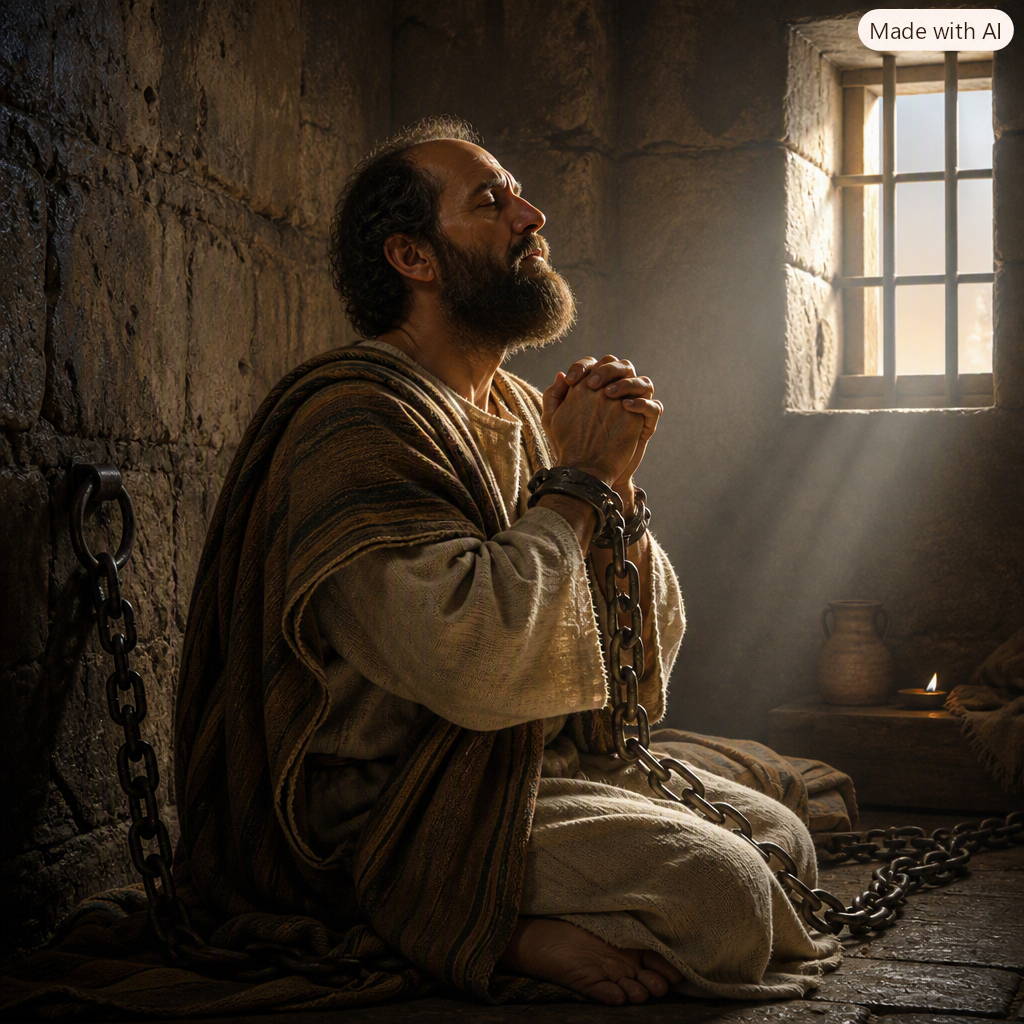
Prayer for the Saints
Introduction
I have realized that God intentionally placed prayers in His Holy Word. Why did He do that? One great reason why was to teach us how to pray. He also wanted to show us that prayer is essential for a healthy relationship with God. He wanted to show us the miraculous power of prayer. But God also put many prayers in the Bible because He wants us to pray! He wants us to pray like the Apostle Paul and great things will happen when we do. This underscores our role and responsibility in prayer. Please think about this as we pray Ephesians 3:16-21.
16 I pray that, according to the riches of his glory, he may grant that you may be strengthened in your inner being with power through his Spirit, 17 and that Christ may dwell in your hearts through faith, as you are being rooted and grounded in love. 18 I pray that you may have the power to comprehend, with all the saints, what is the breadth and length and height and depth, 19 and to know the love of Christ that surpasses knowledge, so that you may be filled with all the fullness of God. Ephesians 3:16–19 (NRSV)
Chapter 3 of Ephesians is quite remarkable. After spending the first two chapters describing who we are in Christ, Paul starts chapter 3 by saying, “For this reason I, Paul, the prisoner of Christ Jesus for the sake of you Gentiles ...” (Ephesians 3:1) and then he goes on to talk about his calling and his mission to preach Christ to the Gentiles. Despite being called to such a great task, he mentions that he is writing from prison. To encourage the church not to lose heart, he prayed the prayer recorded in Ephesians 3
Paul prayed in Verse 16, “that, according to the riches of his glory, he may grant that you may be strengthened in your inner being with power through his Spirit.” The word “power” is the Greek word DUNAMIS, which means you CAN or are able to do something. Paul is praying here that the Ephesians would have the power or ability to do three things:
Power to Dwell
In verse 17, Paul prays “that Christ may dwell in their hearts through faith, as they are being rooted and grounded in love.” In other words, we are to make room for what He has revealed to us.
Paul's prayer is that the Ephesians be empowered so that, through their faith, they can create space in their hearts for Christ. "Dwell" means "to establish a residence" and signifies being at home. We moved our household items to our new apartment (dwelling) in Ohio. We are not residents yet because we have not dwelt there. We physically must be there for us to be considered residents of Ohio.
At one level, Christ takes up residence in our hearts when we accept Him through faith. However, Paul's message is directed to the Ephesian church – to believers. As believers, are we making room in our hearts for God? Are we not only accepting Him as our Savior but also acknowledging Jesus as the ruler of our lives? In this sense, the question is not WHETHER Christ lives in you, but rather, how WELCOMING is He in our hearts. Is Jesus the ruler of your life? Have you confined Him to a specific area or given Him freedom within your heart?
Inviting someone to spend the night in your home is not the same as officially welcoming them into your family. Jesus is not just a temporary visitor but rather the leader of your household. While you can tidy up your home to host guests, you wouldn't approach cleaning in the same way when it comes to family.
I read a fascinating book called “My Heart—Christ’s Home” years ago written by Presbyterian Pastor Robert Munger. Regarding Ephesians 3:17, Munger wrote, “Without question, one of the most remarkable Christian doctrines is that Jesus Christ himself, through the Holy Spirit, will actually enter a heart, settle down, and be at home there. Christ will live in any human heart that welcomes him.”
The book illustrates the Christian life as a house that Jesus moves through, room by room. Jesus discovers various worthless things and trash in the mind (referred to as the library) and replaces them with His Word. In the dining room of appetite, He encounters sinful desires on a worldly menu but replaces them with humility, meekness, love, and other virtues for which believers long. He proceeds to the living room of fellowship, finding worldly companions and activities, then to the workshop, where only toys are being made, and finally to the closet, where hidden sins are kept. Only after cleaning every room and closet within us can He genuinely settle down and be at home.
Joseph Bau was born on June 18, 1920, in Krakow, Poland. He grew up during the German invasion of Poland and lived with his family in a well-off middle-class area in Krakow. He displayed early artistic talent and commenced his art studies at the University of Arts in Krakow at the age of 18, but his studies were disrupted by the war. His family was moved to the Jewish Ghetto and later to the Plaschow concentration camp. Joseph was recruited by the Nazis, due to his artistic skills and expertise in Gothic lettering, to create maps and signs for the camp. He used his position to assist over 400 Jews in escaping the camp by forging false documents and identity papers. Oskar Schindler saved Joseph Bau's life in the concentration camps. In the film "Schindler's List," Bau is depicted placing a stone on Schindler's grave. When asked after the war why he didn't forge documents for himself, Joseph responded, "Then who would have done it for the other Jews?"
Similarly, when Jesus was crucified, a similar question was posed: "He saved others; he cannot save himself?" Jesus replied, "What should I say, ‘Father, save me from this hour’? No, it was for this very reason I came to this hour." Jesus surrendered himself on the cross for us, obeying to the point of death, relinquishing everything for us. We should be ready to do the same, giving up everything for Him.
I pray that the power of Christ may truly dwell in your hearts through faith, not just as a savior in your life but also as your Lord.
Power to Comprehend
Ephesians 3:18 (NRSV): ‘I pray that you may have the power to comprehend, with all the saints, what is the breadth and length and height and depth.”
Paul prays that the Ephesians will gain a profound understanding of God's sacrificial love. The term “comprehend” in this verse is KATALAMBANO, which originates from the Greek word meaning “to take into oneself.” Paul is praying that we will be able to perceive the extents of God’s love and EMBRACE it as our own. It's not just about intellectual comprehension; it's experiential, a profound, personal encounter with His love.
Only through God's power can we genuinely grasp the magnitude of God's love for us because God's love is limitless. How immense is God's love for us? To grasp that, one must comprehend the price that Jesus was ready to pay for our sins.
John 3:16: "For God so loved the world that he gave his one and only Son, that whoever believes in him shall not perish but have eternal life.
John 15:13: Greater love has no one than this, that he lay down his life for his friends.
You might not have realized the extent of your need for a savior, but the truth is that you do. If there was no need for a savior, Jesus wouldn't have come to earth and sacrificed himself on the cross for you. Recall the moment when the angels appeared at Christmas and proclaimed the birth of Jesus, announcing, "Celebrate! A Savior has been born to you in Bethlehem." You were in need of someone to come to your rescue, just like making sure kids wear seatbelts – they might not realize it, but you love them enough to ensure their safety.
Jesus frequently shared parables to convey truths about God. On one occasion, He did something quite extraordinary. He presented three stories consecutively, all with the same central message. In rapid succession, He recounted the same narrative in three distinct ways. This can be found in Luke 15.
The first parable tells the story of the lost sheep. The shepherd leaves the 99 sheep to search for the one that is lost. After an extensive search, he finds the lost sheep, brings it back home, and celebrates with a party.
The second parable is about a woman who loses one of her ten coins. She meticulously searches for the lost coin, eventually finding it and rejoicing by inviting her neighbors to celebrate with her.
The third parable is about the prodigal son who leaves home but then decides to return. When his father sees him from afar, he runs to greet him, embraces him, and plans a celebration with the best calf. What was Jesus trying to convey with these three consecutive stories? The underlying theme in each story is the loss of something valuable. The shepherd deeply cared about the lost sheep, the woman was determined to find her lost coin, and the father treasured his returning son. The message is that you are important to God. The common thread in these stories is the unwavering effort to rescue what was lost.
God’s love is LONG. It is “long enough” to endure for eternity. This is what distinguishes it from human affection. Have you observed that human love fades? This is why there are so many divorces. God's love will never cease to love you. It is sufficient to endure for eternity.
God’s love is WIDE. Wide enough to be everywhere. There is no place you could go where God’s love is not with you. You will not always feel it. Sometimes, you’re going to FEEL ALONE. But you will never BE ALONE. That is because God’s love is everywhere. There’s no place that you can be where God isn’t. It’s wide enough to be everywhere.
God’s love is DEEP. Deep enough to handle everything. There is no problem, no pressure, no stress, no difficulty. You say, “I’m in the pits right now!” There is no pit so deep that God’s love is not deeper still.
God’s love is HIGH. High enough to overlook all your mistakes, no matter how big those mistakes may have been. God loves to forgive. He loves to help you start over.
When we look at God’s love for us, primarily expressed in Christ and his cross, we ask, "How can you say no to a love like that?" The VBS Children sang the song Deep and Wide, and no one is sure what fountain is being sung about; the author left no commentary. I want us to consider that the song is a metaphor for God’s love that flows freely from heaven for all. I am going to go out on a limb and suggest that the author had Ephesians 3:17-18 in mind, and I suspect that another verse goes something like this: “Long and High, Long and High. There's a fountain flowing Long and High.”
Power to Know
(vs. 19) “to know the love of Christ that surpasses knowledge, so that you may be filled with all the fullness of God.”
Finally, Paul prays for the Ephesians to comprehend and genuinely encounter God's love in their lives. God's love surpasses knowledge, implying that it's not solely about intellectual understanding but about personal experience. To know is translated from the Greek word GINOSKO, which signifies more than mere intellectual agreement. It's the same term used for a husband's understanding of his wife, for example, knowing your wife both before and after your wedding day.
God loves you so much that He wants to have a close connection with you. Your purpose in life is not just to make money, retire, and then pass away. You are here on this earth because God made you to be loved. You were specifically created to be the object of God's love and to have a relationship with Him.
One of the reasons the religious leaders of Jesus' time were so upset with Him was because He taught that we could address God in an intimate and loving way. We can say, "Our Father in heaven," instead of "O powerful and supreme ruler." If your children came to you and called you "O powerful parent of our family," you would be confused. Jesus said we can talk to God and call Him "Our Father." In Aramaic, it's ABBA, which means "daddy." We can refer to God as daddy. We can also call Him our friend. You can have a close, warm, and loving relationship with the creator who made you.
---------------------------
Maybe you are thinking to yourself, "I'm an atheist or an agnostic ". It is not about religion; it is about having a personal relationship with God. You may think that you are the number one atheist in the world. God still wants to have a relationship with you.
You may think you have committed the unpardonable sin, beyond redemption. God wants to have a relationship with you. You may have done something you’re so ashamed of and regret, but God wants to have a relationship with you. You may have committed adultery. You may have had an abortion. You may have stolen to support a drug habit. God still wants to have a relationship with you.
There is nothing you can do that will make Him love you any less. There is nothing you can do that will make Him love you any more. His love is based on who He is, not what you’ve done. You may feel unworthy. You may feel it’s hopeless. You may feel you’re too old, too young. But God wants to have a relationship with you.
Do you know that Jesus loves you? Have you truly experienced that love? Often the world may think that the church is all about rules and regulations, but that is not it at all. The heart of the Gospel is the truth that God loves you and longs that you would experience His love.
An atheist lived in a certain village. He was not a terrible person. He had no interest in going to the boring, traditional church that was the only one in the village. One day, the church building caught on fire, and the whole town ran toward it to help extinguish the flames, including the village atheist. Someone said, “Hey, this is something new for you; it is the first time we’ve ever seen you running to the church!” He replied, “It's the first time I have ever run to the church because it is the first time I’ve ever seen the church on fire!”
Jesus said that the world would know that we are Christians by our love. To communicate God’s love to others you have to first know it yourself. My prayer for you this morning is that Christ would dwell in your hearts through faith and that Jesus would truly be Lord of your life. I pray that you will understand or grasp God’s love and know that love in a powerful and personal way.
Closing thought:
In Christ We Have:
A love that can never be fathomed
A life that can never die
A righteousness that can never be tarnished
A peace that can never be understood
A rest that can never be disturbed
A joy that can never be diminished
A hope that can never be disappointed
A glory that can never be clouded
A light that can never be darkened
A purity that can never be defiled
A beauty that can never be marred
A wisdom that can never be baffled
Resources that can never be exhausted.
_____________________________
You are invited to listen to the He Guides Me Podcast where two people discuss the sermon. Note: this is an AI-generated podcast.